The Office Blend Blog

Finding Career Chutzpah: Why We Don’t Ask for What We Need at Work

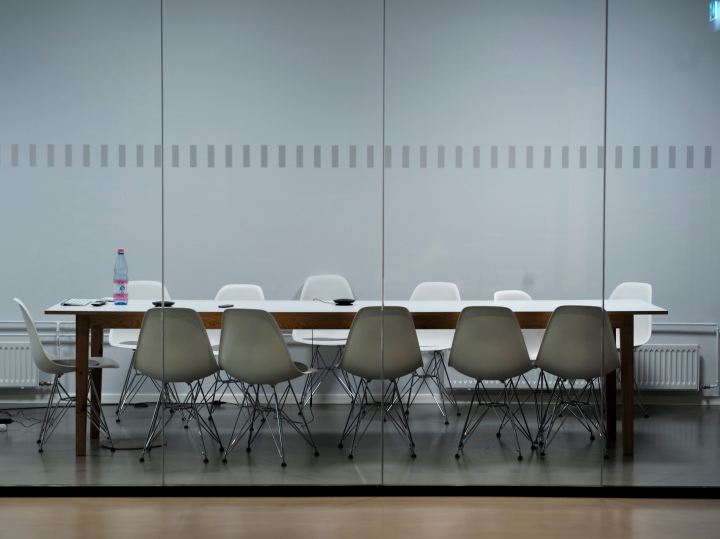
damiano-baschiera-763441-unsplash
Photo by Damiano Baschiera on Unsplash

It is difficult to ask for what we need career-wise.

But, that hesitation doesn’t make us less deserving. We all have something we need, whether it is guidance, a more flexible schedule, increased challenge or exposure.

But we are fearful. We hesitate. We role-play the potential outcome of the conversations in our minds.

To progress in today’s world of work, mastering “the ask” is an absolute necessity. Wherever you find yourself in your career journey — asking for what we need is simply a challenge we must overcome. If not we begin to “whither on the vine”.

How do we address this common problem? Rather than examining the “hows” of asking for what we need — let’s examine the “whys” behind our hesitation.

A few things that hold us back:

  • We’re in the dark about our performance. In some cases, we are simply unsure of our actual worth. Why? Because we don’t seek honest feedback. Asking your boss, clients or colleagues, “How did you feel about the work I completed?” is a fair and reasonable question. So — ask away. We need to know where we stand to feel we are in any position of power. Gathering the facts is really the only way.
  • A couple of “hard knocks”. In part, this is all a confidence game, and we have all experienced setbacks at work. Because of these experiences, we can develop a bit of a “blind spot” concerning our true value. We become guarded and hesitate to take risks. In the end, we have to look at failures as learning experiences — then commit to looking forward. Just remember, you are in good company.
  • We hate to brag. This is really tough one. Most of us feel we shouldn’t “toot our own horn” or play up our strengths. However, to secure that needed “leg up” — we need to ensure that others are noticing our work. A little well-placed “Marketing” is a necessity. Mention skills and accomplishments as “data points” that directly relate to the opportunities that are being discussed.
  • We don’t like to ask for anything. You may not like to depend on anyone to help secure your future. You may even think this would cause you to appear needy or less competent. Remember that no one is an island. It actually takes many people to build a meaningful career.  So open yourself up to reach out.
  • We’ve made unreasonable comparisons. Sometimes we feel unworthy because we are drawing unhealthy comparisons in relation to the careers of others (and judging ourselves harshly). We feel we don’t measure up and don’t have any claim to valuable outcomes. The imposter syndrome can also be at play — so be sure to face your doubts, as they are likely unreasonable.
  • We are afraid of the word “No”. The prospect of being rejected is never a pleasant — and hearing a negative response is a possibility. However, remember that we have the ability to recover.

This dynamic takes time to overcome. Simply start small and work your way forward. Asking for what you want or deserve might be difficult the first time around — but the process will get easier.

Just remember this: If you ask —  you just may get.

Have you been faced with this dilemma? What happened?

Dr. Marla Gottschalk is an Industrial/Organizational Psychologist. She is a charter member of the LinkedIn Influencer Program. Her thoughts on work life have appeared in various outlets including Talent Zoo, Forbes, Quartz and The Huffington Post.

Getting Over the Hump of “Hump Day”

camel

Wednesdays — the grumpy “middle child” of the work week.

If only Wednesday could magically turn into a Friday, or dare I say transform into Saturday.

While you might have breezed through Monday and Tuesday — somehow Wednesday just seems to “snag”. Our refreshed feeling from the weekend has definitely faded. You may find that you struggle through meetings and “zone out” while others are speaking.

If you aren’t having a particularly exciting week or already feel overwhelmed, you may wonder if you’ll get through to Friday.

I’ve actually held a grudge against Wednesdays for years — and I don’t think I’m alone. It’s really a bit unfair. So, it’s time to change our tune.

Wednesday’s don’t need to be the day that we just “get through”.

In this vein, here are a few strategies that might help make Wednesdays your favorite day of the work week:

  • Save the best for Wednesdays. Hoard something you enjoy work-wise for mid-week. For example, a project that really interests you. Even if the time increment is modest (say 20 minutes) — you’ll feel more energized.
  • Get out of the building. Anoint Wednesdays as the day you make plans to leave the office (and yes, your computer) for lunch. Invite someone new to join you each week — someone that has an interesting role or personality.
  • Start the day with a boost. Do you have a favorite colleague or business contact? Allow yourself time to reach out to them first thing on a Wednesday — a great way to boost both perspective and mood.
  • Laugh a little. Start out Wednesdays with a workplace humor. Read a few New Yorker cartoons or listen to a clip from your favorite workplace inspired movie. (I love clips from Office Space.)
  • Improve you. Make Wednesdays, the day of change. Disallow a workplace behavior that probably isn’t doing you any favors — and revise the “status quo”. For example, aim to go the entire day without contradicting someone. Listen without interrupting. Refrain from sending e-mails that could replaced by a walk down the hall. You get the idea.
  • Be nice. Show a little gratitude. Make Wednesdays the day that you thank as many people as possible for adding something positive to your work life. Bring your “stars” a coffee or a danish and vow to stop taking people for granted.
  • Build on a success. Review the events of last week and tease out at least one success. Write down 2 or 3 actions that would build on that progress — and keep the forward momentum going. Now follow through.

How do you get through “Hump Day”? Share your strategies.

Dr. Marla Gottschalk is an Industrial & Organizational Psychologist. She also writes at liveworkthinkplay.com.

The Untold Resume Story

pawel-chu-ULh0i2txBCY-unsplash

Last week, I attended a client meeting discussing the merits of candidates for a key position. At one point, the conversation turned to a current freelance contributor with whom they had developed a long relationship . The conversation went something like this:

Company Executive A: “What about bringing in Erin on this one? Her work is beautiful.”

Company Executive B: “We should think about the required progress on this project — we need to keep things moving along quickly.”

Company Executive C: “I really would like to see Erin here, but I worry about her ability to handle the schedule when the pressure heats up.”

Hmmmm. The information shared by Company Executive C was certainly never mentioned previously. This candidate had completed multiple projects with the company quite successfully. Her work was described as “inspired” — and she usually hit budget targets. However, it appeared that a portion of her “invisible” or “unwritten” resume was affecting her chances with the current opportunity.

This poses an interesting aspect of resumes.

It is likely that we all have an alternative or unwritten resume —  which effectively captures what is not included in the more formal version. (See a great discussion of the topic in this classic HBR post.) This unwritten version, might include aspects of our work life including attitude, performance under pressure and our overall ability to collaborate.

We all have a side to our broader career story that we may be overlooking — and its elements may have a significant impact on our future. We need to ascertain the complete story and address it. The sooner the better.

So what do you think might be included in your “invisible resume”?

Time to think on that.

Dr. Marla Gottschalk is a Workplace Psychologist. She also writes for Linkedin and US News & World Report.

Joy at Work: How about a little “Arbejdsglæde”?

tim-mossholder-1119926-unsplash
Photo by Tim Mossholder on Unsplash

In response to a post about positivity in the workplace, a very kind reader (Casper P.) let me know that in his language, a very unique word existed (My Danish friend also confirmed this.) The word was “Arbejdsglæde” — translated into English this means “happiness at work” or “work joy”. Here is his comment:

Scandinavian countries have a single word for “Happiness at work” — Arbejdsglæde. This site posted a great video on why we need more of it: http://whattheheckisarbejdsglaede.com

If only we could only bring more Arbejdsglæde into our work lives on a daily basis. Arbejdsglæde is the positive feeling that develops when you simply love what you do. It stokes motivation and serves as an reliable source of energy. In turn, the work brings a keen sense of satisfaction. Of course, this is something we should all readily seek — and a bit of joy may be exactly what we need to affect the troubling lack of engagement in the workplace today. More joy at work? As a psychologist, that is something that I can certainly live with.

Here is an example of Arbejdsglæde in action — the moment the rover Curiosity lands on Mars. (More great videos at http://whattheheckisarbejdsglaede.com)


Ultimately, joy and work should co-exist — but we have been resistant to offer ourselves permission to seek this out. In her HBR post Joy at Work: It’s Your Right, Allison Rimm describes how she has utilized a joy meter in her coaching practice. When clients would enter for a session, they would rate the level of joy (vs. hassle) they were currently feeling from their work. The underlying premise? We all should derive some measure of joy from our work.

We might encourage joy at work through the expression of gratitude, developing hope and encouraging camaraderie. But we can also grow joy, by aligning our work with our strengths — and learning to express what we really need to derive satisfaction from our work.

So, let’s bring a more joy to our workplaces — ourselves, our clients  and our colleagues.

It’s a good thing.

Dr. Marla Gottschalk is a Workplace Psychologist. She also writes for Linkedin and US News & World Report.

Strategy Break – Angela Lee Duckworth: The Key to Success? Grit – The TED Talks

Becoming More Positive: Embracing “Plan B”

plan b

I’ve never been afraid of  “Plan B”.

You know, the plan that is implemented after “Plan A” goes down in a fiery ball of flames. I have my first two bosses to thank for this perspective. Starting out in customer research, “Plan B” was certainly a lesson I learned rather quickly. Samples were never how I envisioned them. Implementation was never perfect. The results that followed? There was always some sort of  surprise —  a “twist” — so to speak.

How can we handle the inevitable imperfections that are a reality of our everyday work lives? How can leaders help us face the challenges that inevitably occur? During these quickly evolving these and unpredictable times, that is the question of the moment. The answer? This may relate to the level of positivity that our leaders possess and the behaviors they model for us. My first supervisor, for example, never flinched when a concern was raised. She simply listened and helped me work through the issues confidently. No drama. Just focus.

As it turns out, a leader’s expression of positivity could be one key to the psychological well-being of their followers — and the performance outcomes which follow. (A clear expression of hope and resilience, for example.) Recent research examining the construct of leader Psychological Capital, is elucidating the power of this connection.

Psychological Capital (PsyCap) is construct composed of four well researched psychological resources (the HERO resources) as follows:

The HERO resources:

  • Hope. A belief in the ability to persevere toward goals and find alternative paths to reach them.
  • Efficacy. The confidence that one can put forth the effort to affect outcomes.
  • Resilience. The ability to bounce back in the face of adversity or failure.
  • Optimism. A generally positive view of work and the potential of success.

In reality, those who lead or manage others possess varying levels of Psychological Capital — and the outward expression of those resources can change how we view (and process) the challenges we face in our work lives. Without this psychological support, failure can be just a failure. Not an opportunity to learn a few things and move forward feeling empowered.

So for what it is worth — thank you Marty and Elyse. Great bosses are worth their weight in gold.

What do you think? Does a leader’s level of positivity impact the workplace? Share your thoughts here.

Dr. Marla Gottschalk is a Workplace Psychologist. She also writes at Linkedin.

I Had a Life…But My Job Ate It?

freddie-marriage-vSchPA-YA_A-unsplash

Yesterday while driving home, I noticed a bumper sticker as I waited at a light. It read: “I had a life, but my job ate it.”

Hmmm.

Fitting that this car should stop next to me. As you can imagine, the message bothered me on a number of levels. (I was a deer in headlights for a moment, requiring a reminder from the driver behind me the light had changed.) On one hand, with all that is written about work-life balance — you would think we were beginning to get a handle on the issue. On the other hand, it dawned on me that we may need more than a brief refresher concerning the potential contributors to the “out of balance” state.

We blame our jobs for eating up out time. However, I doubt it is that simple. We are there as well. It is possible that we contribute (not fully cause, mind you) to the situation.

A few things to think about:

  • We’re really having a time/task management issue. Life can be busy – often exceedingly so. As a result, we need to examine our use of time and the value we afford it. (If we don’t value our own time, no one else will.) Often when we complain of a lack of time, we actually are suffering from a task crisis. More specifically, we are not prioritizing or possibly eliminating, tasks that add little to our lives at work (or outside of the office for that matter.)
  • We’re not striving for the right kind of “peace”. I’m not convinced that “balance” is the right goal.  (Somehow that brings to mind a precariously perched set of spinning plates). When you examine the roles of busy and productive people, we find that there are times that work-life balance isn’t really “balanced” at all. In fact, there are moments when a shift towards one direction or another (work or personal life) is required and healthy. Maybe we should shoot for a different goal, somewhat like the one discussed in this recent HBR posts entitled: Work-Life “Balance” Isn’t the Point.
  • Organizations just aren’t listening. We cannot have a healthy sense of balance, if organization aren’t listening to our needs. Sure we’re all prepared to pitch in when we have an important or meaningful deadline. However, when every day brings drama and stress — this is an entirely different situation. If employees are expressing that processes and procedures need to change, for the well being of all involved, organization certainly need to take notice and make changes. Leaders take note.
  • We’re not engaged (and we’re not talking about it). I’m not sure how you feel about this, but sometimes I enjoy being “out of balance”. When I am on deadline or working on an interesting topic, I love the power that comes with the feeling of being truly connected to my work. My litmus test? If  I am so “job involved”, that the time flies by. If your job doesn’t align with your strengths and provide a core sense of energy — you need to do something about it. Seek engagement in your work life at every turn. If not, I fear that every moment at work will seem like an intrusion on our “real lives”.

What else may be operating here? Share your thoughts.

Dr. Marla Gottschalk is a Workplace Psychologist. She also writes for Linkedin and US News & World Report.

Strategy Break: Let’s Bring Back Lunch and Other Retro Workplace Traditions

workplace 1960sThe workplace has evolved at such a break neck pace — that we often struggle to comply. So many things have transformed. Social media has revolutionized the tenor of communication and we have all jumped on the mobile carousel. However, 21st century developments, do not necessarily demand that we abandon every example of the “old” ways of doing business. Sometimes, tried and true traditions still hold quite a bit of workplace punch.

In that vein, here are a few methods to enhance your work life with a bit of “retro” flair.

  • Do lunch (and not at your desk). I love social media, Skype and a great Google hangout — but there is nothing like having a conversation with a colleague or friend over a bite to eat, at your favorite lunch time joint. Try this once a week and see what develops.
  • Hold an “unplugged” meeting. You may not remember what meetings were like before the ever-present distraction of devices, but that doesn’t mean you can’t give it a whirl. At your next meeting turn all phones, computers and tablets off  — then place them in the center of the table for the duration of the meeting. I dare you. Really.
  • Say “thank you”.  Showing gratitude — now there is a topic that never goes out of style. Has someone gone above and beyond as a contributor? Gone out of their way to make your work life easier? Send them a hand written note. (Yes, these still exist.)
  • Start early or stay late. I don’t know about you, but working when there is no one else around can be a liberating experience. No calls or interruptions — simply dedicated time to think deeply. Everything knocking around within your mind has a chance to ferment and just “be”.
  • Celebrate a success. I don’t mean landing on the moon – I mean “We completed that Goliath of a proposal” or “We dealt with that important client or customer problem effectively”. Buy a cake – bring in coffee drinks. Any small gesture to mark the occasion.
  • Engrave something. We may not stay at a single organization for 30 years – but many of us do achieve a healthy level of tenure. A gold watch might not be feasible, but marking the occasion of a 1, 5 or 10 year anniversary deserves more than a moment of recognition. If you are a freelancer, mark your relationships with organizations in the same manner.

Taking a cue from the past is not always the wrong way to run a business. What “retro” practices would you like to see make a comeback?

Dr. Marla Gottschalk is a Workplace Psychologist. She also writes for Linkedin and US News & World Report.

Strategy Break – Scott Dinsmore: How to Find and Do Work You Love – The TED Talks